Choosing
3K vs 12K vs 18K carbon padel racket: the difference explained
The K in carbon is the number of filaments per bundle: 3K is 3,000, 12K is 12,000 and 18K is 18,000. The number tells you about the weave, not on its own how well a racket plays.
Contents
- What the K in carbon means
- 3K vs 12K vs 18K carbon side by side
- 3K vs 12K: why a higher number is not automatically better
- Five claims you often hear
- What really determines the feel
- What about fibreglass?
- What we offer: 3K, 12K and 18K
- How to choose between 3K, 12K and 18K
- Checklist for choosing your carbon
- Your next step
- Frequently asked questions
In a carbon padel racket, the K stands for the number of carbon fibres per bundle in the weave: 3K is 3,000 fibres, 12K is 12,000 and 18K is 18,000. So when you compare 3K vs 12K vs 18K carbon, the number tells you about the weave and the look, not on its own about quality. How a racket plays depends mainly on the core, the layup, the resin and the shape. At MerchPadel, the difference between the 3K and the 12K or 18K therefore lies mainly in the core.
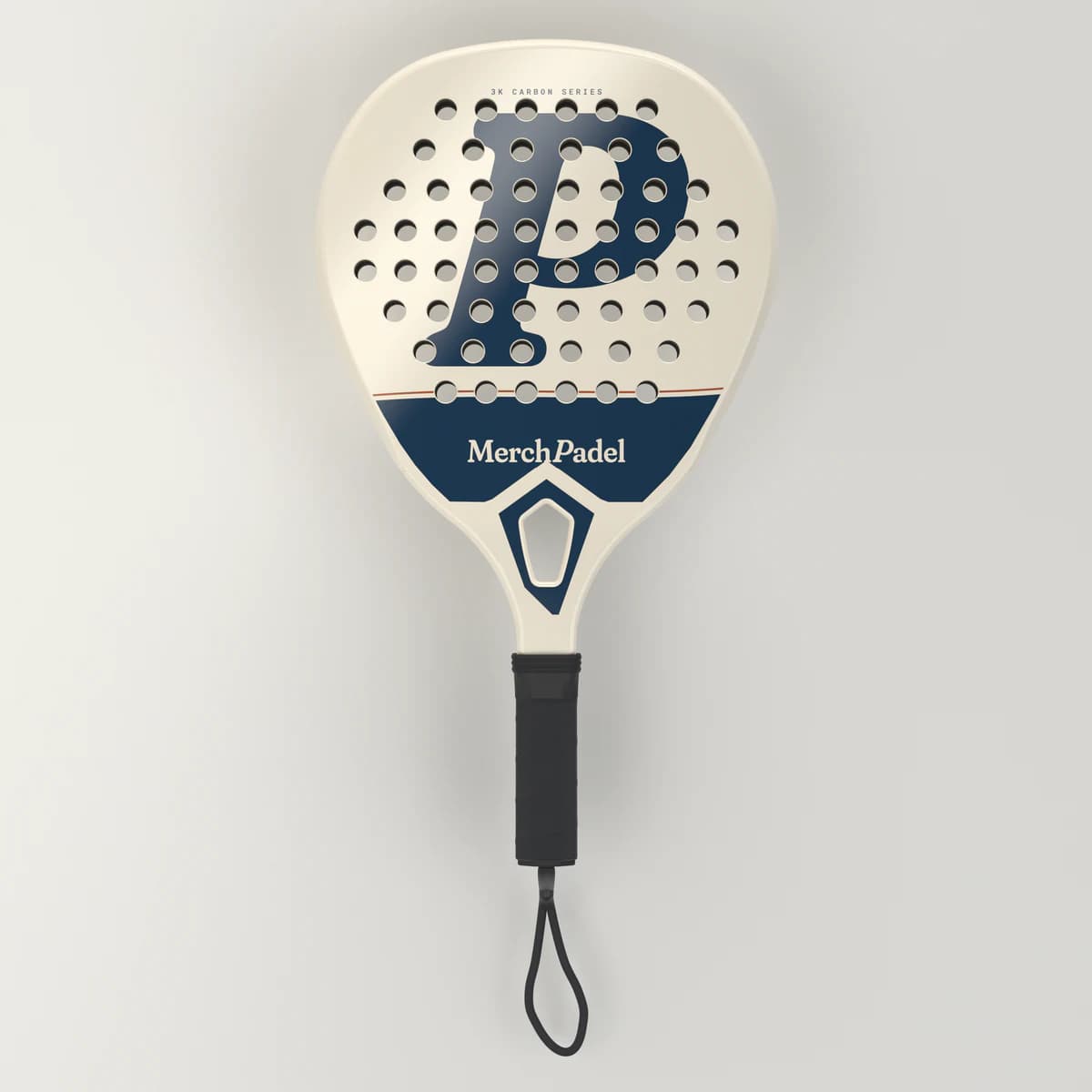
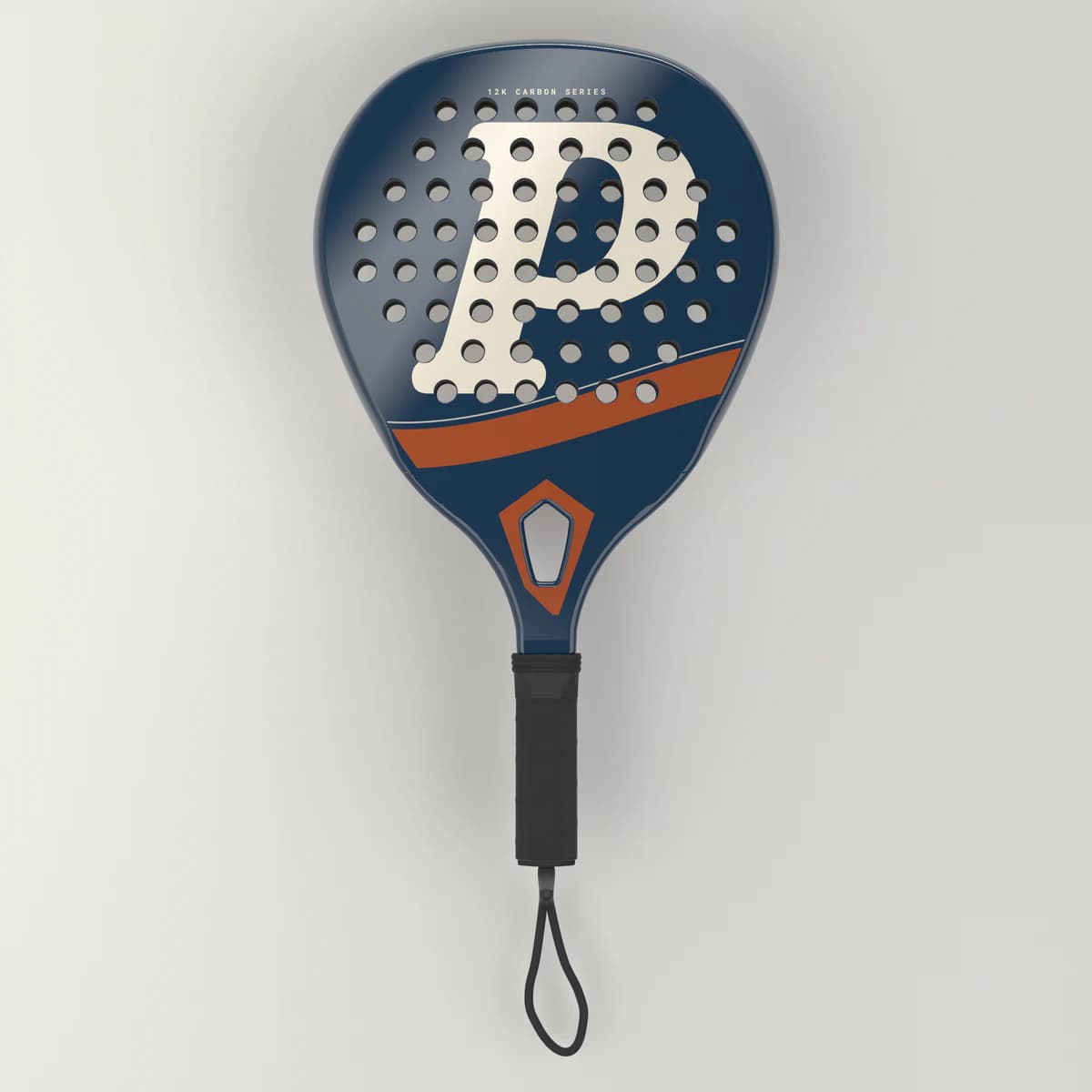
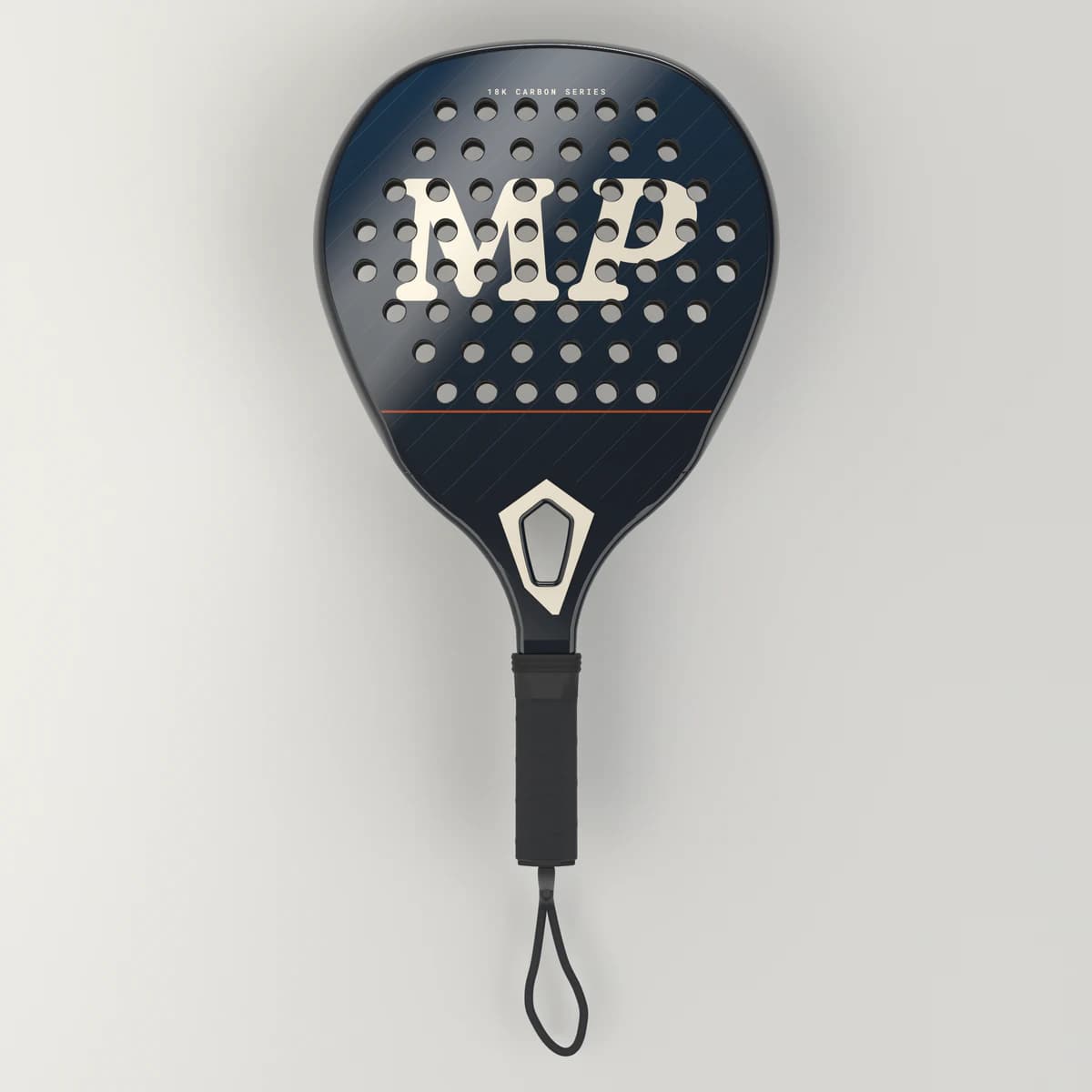
In shops and adverts, a higher K number is often presented as better. It is not that simple. In this article we explain what the numbers mean, what they do not mean and how to choose. We offer one racket, the teardrop, with a face of 3K, 12K or 18K carbon, each with its own price: the MerchPadel 3K, the MerchPadel 12K and the MerchPadel 18K.
What the K in carbon means
Carbon, or carbon fibre, is made of extremely thin threads called filaments. A manufacturer bundles those filaments into a strand, known as a tow. The K stands for thousand. A 12K tow therefore contains 12,000 filaments, as the English-language Wikipedia also explains on its page about tow (accessed on 24 September 2026).
Those tows are woven into a fabric, much like cloth. Thin 3K tows give a fine, tight pattern with small blocks. Thick 12K or 18K tows give a coarser pattern with larger blocks. So the number first tells you something about the thickness of the bundle and what the weave looks like.
3K vs 12K vs 18K carbon side by side
This table puts the three types of carbon side by side, with the last column showing how each one is used in our rackets. We describe what they are, not which one is better.
| Carbon | What it is | Weave and look | At MerchPadel |
|---|---|---|---|
| 3K | 3,000 filaments per bundle | Fine, tight pattern | MerchPadel 3K, medium EVA core: comfortable and forgiving |
| 12K | 12,000 filaments per bundle | Coarser pattern, larger blocks | MerchPadel 12K, hard EVA core: firm and direct |
| 18K | 18,000 filaments per bundle | Coarser pattern still | MerchPadel 18K, hard EVA core: very firm |
As a material, all three types of carbon are stiff and light. The difference between 3K, 12K and 18K lies in the bundle and the weave. How stiff a face feels in the end comes down to the combination of layers, resin and core.
3K vs 12K: why a higher number is not automatically better
A higher K number sounds like more. But more filaments per bundle does not mean more carbon in the racket. A manufacturer can work the same amount of material into a face with thin or thick bundles. The difference lies in how the weave sits and how easily it can be shaped.
Fine 3K tows are easier to lay around a curve than thick tows. That is a difference in processing, not a ranking. Which choice suits a padel racket depends on the rest of the build. Anyone who claims that 12K or 18K simply hits harder or lasts longer is telling only part of the story.
Five claims you often hear
When you choose a racket, you keep coming across the same phrases. Below is what holds true in each of them, without turning it into a ranking.
| Claim | What holds true |
|---|---|
| 12K is stronger than 3K | The number is about the bundle. Strength depends on the number of layers, the direction of the fibres and the resin. |
| 18K is an upgrade from 12K | The weave is coarser. Our 12K and 18K have the same hard core; the 18K feels slightly firmer, not better. |
| A higher number always feels harder | How hard a racket feels comes down mainly to the core. Our 3K feels softer because of the medium EVA, not because of the weave. |
| You can see the quality in the weave pattern | The pattern shows the thickness of the bundle. Under a coat of lacquer or a print, it is sometimes not even visible. |
| The higher the number, the more expensive the racket | The price depends on much more: the core, the finish, the production and the number made. |
The common thread: a single number never tells the whole story. Look at the racket as a whole.
What really determines the feel
The face is only one layer of a padel racket. How the racket feels and plays is the sum of four things.
The core
Between the two faces sits a foam core, usually EVA or a softer foam. A harder core gives a crisp, direct feel and more control on hard balls. A softer core gives more and helps with gentle shots. The core often shapes the feel more than the weave on top of it.
The layup
A face consists of several layers of fibre, which can run in different directions. The number of layers and their direction help determine how stiff the face is and how it vibrates. Two rackets with the same K number can therefore feel very different.
The resin
Fibres on their own are limp. Only with resin, a plastic that hardens, does the weave become a rigid sheet. The type of resin and the ratio of resin to fibre help determine how stiff and how strong the face becomes.
The shape
A round racket plays differently from a teardrop or a diamond, whatever the material. We only offer the teardrop, so across our three rackets the shape is the same and the difference lies in material and core. Why we chose the teardrop is explained in round, teardrop or diamond: why we chose the teardrop. For more on weight and balance, read padel racket weight and balance.
What about fibreglass?
On the market you will also see rackets with a fibreglass face. That is a different material, without a K number. Fibreglass flexes more easily, often gives a softer feel on a gentle shot and is usually cheaper. Carbon is stiffer and weighs less for the same stiffness. We only offer carbon. If you are after the softer feel people mention with fibreglass, our 3K comes closest, thanks to its medium EVA core.
What we offer: 3K, 12K and 18K
We have one racket, the teardrop, in three materials, each with its own price. The 3K has a 3K carbon face and a medium EVA core: comfortable and forgiving, with plenty of control. The 12K has 12K carbon and a hard EVA core: firm and direct, with more power on a hard ball. The 18K has the same hard core as the 12K, with the coarsest carbon weave, and feels very firm. So the difference in feel between the 3K and the 12K or 18K lies mainly in the core, not in the K number.
If you are choosing between 12K and 18K, you are mainly choosing the weave: the core is the same, the 18K feels slightly firmer still, and the number on its own says nothing about quality. Have a logo but no design yet? Send it to us through the design service. We will make a design proposal, free and without obligation.
How to choose between 3K, 12K and 18K
- Start with the feel you are after. Soft and forgiving: the 3K. Firm and direct: the 12K. Crisper still: the 18K.
- Consider your level. If you have been playing for less than a year, or play a few times a month, the 3K is the safe choice.
- Think about your arm. The medium EVA core of the 3K asks the least of your wrist and elbow.
- If you are coming from a powerful, hard racket, the 12K and the 18K are closest to what you are used to.
- Ordering for a group with mixed levels? The 3K is easy for everyone to play. Volume pricing applies per design and per model.
Checklist for choosing your carbon
- Do you know what the K means: the number of filaments per bundle, not the quality?
- Do you know whether you want a medium or a hard core? That says more than the K number.
- Does the feel suit your level and your position on the court?
- Are the weight and balance known, or can you measure them yourself?
- Does a claim such as 12K is stronger or 18K hits harder sound too sure of itself? Then ask what it is based on.
Your next step
Know which feel you are after? Take a look at the 3K, the 12K or the 18K, or compare them side by side on custom printed padel rackets. Ordering for a club or company? You will find how it works on business. From 200 pieces, or with special requests, we make a custom quote.
Frequently asked questions
What does 3K carbon mean in a padel racket?
3K carbon means that every fibre bundle in the weave of the face contains 3,000 carbon filaments. The number tells you about the thickness of the bundle and the pattern of the weave, not on its own about the quality of the racket.
Is a 12K padel racket better than a 3K racket?
A 12K padel racket is not automatically better than a 3K racket. The number describes the thickness of the fibre bundle. How a racket plays depends mainly on the core, the layup, the resin and the shape. Between our 3K and 12K, too, the difference lies mainly in the core.
What is the difference between 12K and 18K?
At MerchPadel, the 12K and the 18K have the same hard EVA core and the same shape. The 18K has a coarser carbon weave and feels slightly firmer still. Each has its own price.
What determines the feel of a padel racket most?
The feel of a padel racket is the sum of the core, the layup of the face, the resin and the shape. The core, hard or soft foam, often shapes the feel on the ball more than the K number.
Does MerchPadel also offer fibreglass rackets?
No. There is one racket, the teardrop, with a face of 3K, 12K or 18K carbon. If you are looking for a softer feel, the MerchPadel 3K with its medium EVA core comes closest.