Choosing
Padel racket weight and balance: what they do to your game and your arm
A heavier padel racket gives more power and stability, a lighter one is easier to manoeuvre. The balance decides how heavy it feels. How to measure it yourself and choose what suits you.
Contents
- What padel racket weight does to your game
- Head-heavy or head-light: what balance is and why it matters so much
- How to measure the balance of your racket yourself
- Which combination suits which type of player
- Weight, balance and your arm
- Adjusting the feel without a new racket
- Our rackets
- Checklist before you choose a racket
- Your next step
- Frequently asked questions
The weight of a padel racket determines how much power and stability you get in a shot: heavier drives through the ball, lighter is quicker to hand. The balance determines how heavy that weight feels. A head-heavy racket, with the balance towards the head, feels heavier and asks more of your wrist and elbow than a racket of the same weight with the balance towards the hand. So always look at padel racket weight and balance together.
In this article you will read what weight and balance do to your game, how to measure the balance of your own racket with a slat and a ruler, and which combination suits which type of player. We finish with what it means for your arm. That remains general information, not medical advice.
What padel racket weight does to your game
A heavier racket has more mass behind the ball. That makes it easier to drive through a smash or a hard volley, and it gives way less when a hard ball hits the face. The downside: you need more time and strength to get the racket into position. You notice that mainly in quick exchanges at the net and towards the end of a long match.
A lighter racket is easy to manoeuvre. You are quicker in defence, you last longer and your arm has less to absorb. You do have to generate more of the power from your own movement.
According to an explanation on padel.how (accessed on 24 September 2026), many adult rackets weigh roughly between 350 and 375 grams. That difference seems small, but you feel it after an hour of play. Manufacturers often give a range rather than a single figure, because two rackets of the same model can differ by a few grams.
Head-heavy or head-light: what balance is and why it matters so much
The balance is the point at which the racket sits in equilibrium. You measure that balance point in millimetres from the bottom of the handle, the end of the grip. The smaller the number, the more weight sits towards your hand. Below about 260 mm the balance is called low, from about 260 to 270 mm medium or even, and from about 270 mm high. A low balance is what players call head-light, a high balance head-heavy.
| Balance | Balance point from the bottom of the handle | What you notice | What it asks of your arm |
|---|---|---|---|
| Low | Below about 260 mm | Easy to manoeuvre, plenty of control, quick in defence | The least |
| Medium or even | About 260 to 270 mm | Mix of control and power | Medium |
| High | From about 270 mm | More power in the smash, slower in exchanges | The most, especially wrist and elbow |
This classification comes from two public explainer pages, both accessed on 24 September 2026. According to padel.fyi (terms/balance), a low balance is below 26 cm and a high balance starts at 27 cm. Racketfits.com (blogs/padel-racket-balance-explained) calls about 260 to 270 mm a medium balance and writes that most padel rackets come out between 255 and 285 mm. The boundaries are guidelines: not every manufacturer classifies in exactly the same way.
Balance and weight work together. A light racket with a high balance can feel heavier than a heavier racket with a low balance. The explanation on padel.how (equipment/racket/weight, accessed on 24 September 2026) gives that example too: a 360 g racket with a high balance can feel slower and heavier on the arm than a 370 g racket with a lower balance.
The shape of the racket also steers the balance. Round rackets usually have the balance towards the hand, teardrops often sit around medium and diamonds towards the head. You can read more about this in round, teardrop or diamond: why we chose the teardrop.
How to measure the balance of your racket yourself
You do not need scales or a measuring device. A narrow slat, a ruler or tape measure and a piece of masking tape are enough.
- Stand a narrow slat or a ruler on its edge on a flat table. A round marker pen works too, as long as it does not roll away.
- Lay the racket flat across the slat, with the face parallel to the table.
- Slowly slide the racket back and forth until it stays balanced, without the grip or the head tipping down.
- Mark the point above the slat with a piece of masking tape on the rim. Do not write on the racket itself.
- With a ruler or tape measure, measure from the bottom of the handle, the end of the grip, to the mark. Note the distance in millimetres.
- Compare your measurement with the classification: below about 260 mm the balance is low, from about 260 to 270 mm medium or even, and from about 270 mm high.
- Repeat the measurement twice and take the average. Measure again when you fit a new overgrip or frame protector, as they shift the point.
Three examples, based on our own assumptions. Say you measure the balance point at 252 mm: that is below 260 mm, so a low balance. If you measure 265 mm, you are right in the middle of the medium balance. If you measure 276 mm, you are above 270 mm and your racket has a high balance. If you land exactly on a boundary, for example 260 or 270 mm, measure once more. With a slat, a difference of a few millimetres between two measurements is normal.
Which combination suits which type of player
There is no right or wrong, only a choice that fits you better. This table is a starting point. If you can, first try a racket from a playing partner with the combination you are considering.
| Type of player | Weight | Balance | Why |
|---|---|---|---|
| Beginner or recreational player | Lighter to medium | Low to medium | Easy to manoeuvre and forgiving, your arm gets used to the sport gradually |
| Defender, plays mostly at the back | Medium | Low | Quick to hand for balls coming off the glass |
| All-round player | Medium | Medium or even | Mix of control at the back and power at the net |
| Attacker, lots of smashes | Medium to heavier | Medium to high | More punch in the smash, but asks more of your arm |
| Sensitive arm or elbow | Lighter | Low | Less leverage on wrist and elbow, often more comfortable for long sessions |
Weight, balance and your arm
Padel involves a lot of repetition of the same movements. A racket that is too heavy or too head-heavy for your arm puts a little extra strain on your wrist and elbow with every shot. According to the Dutch health information site Thuisarts.nl (accessed on 24 September 2026), pain on the outside of the elbow is probably caused by doing too much with your arm. It is commonly known as tennis elbow.
A lighter racket or a lower balance can reduce the strain, but it is not a treatment. Your technique, how often you play, your warm-up and the thickness of your grip also play a part. If you have persistent pain in your wrist, elbow or shoulder, see a physiotherapist or your GP. They can look at the cause and give you targeted advice, including about your racket.
- Build up gradually if you start playing more often or switch to a heavier racket.
- Pay attention to your grip: a grip that does not sit well in your hand can make you squeeze harder.
- Stop if a shot hurts, and do not play on with a painful arm.
Adjusting the feel without a new racket
You can fine-tune the weight and balance of an existing racket a little. The difference is a few grams, but you will feel it.
- An extra overgrip makes the grip heavier and thicker. That shifts the balance slightly towards the hand.
- A frame protector on the head adds weight at the top. The balance shifts slightly towards the head.
- Measure again with the slat after every adjustment, so you know what you have changed.
Our rackets
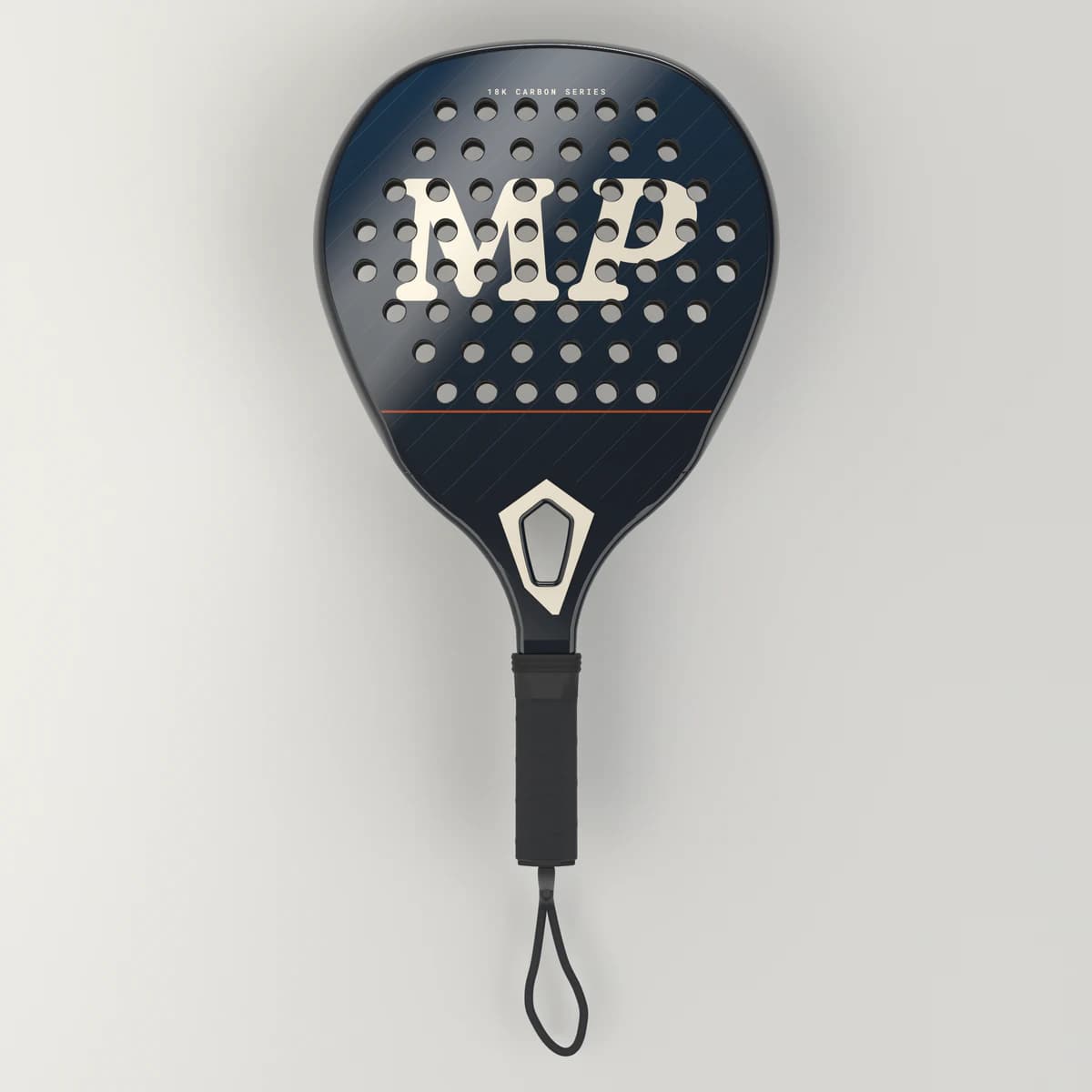
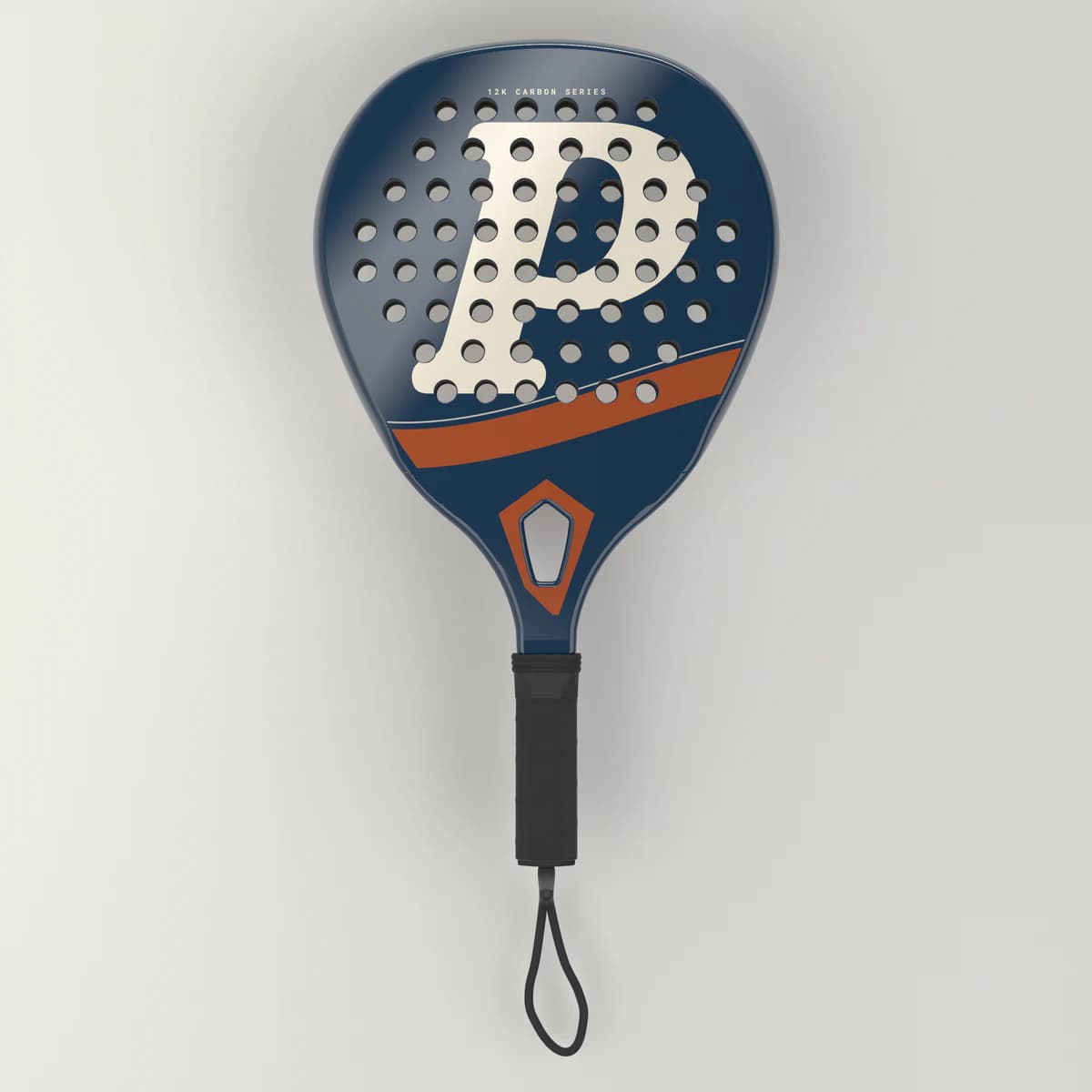
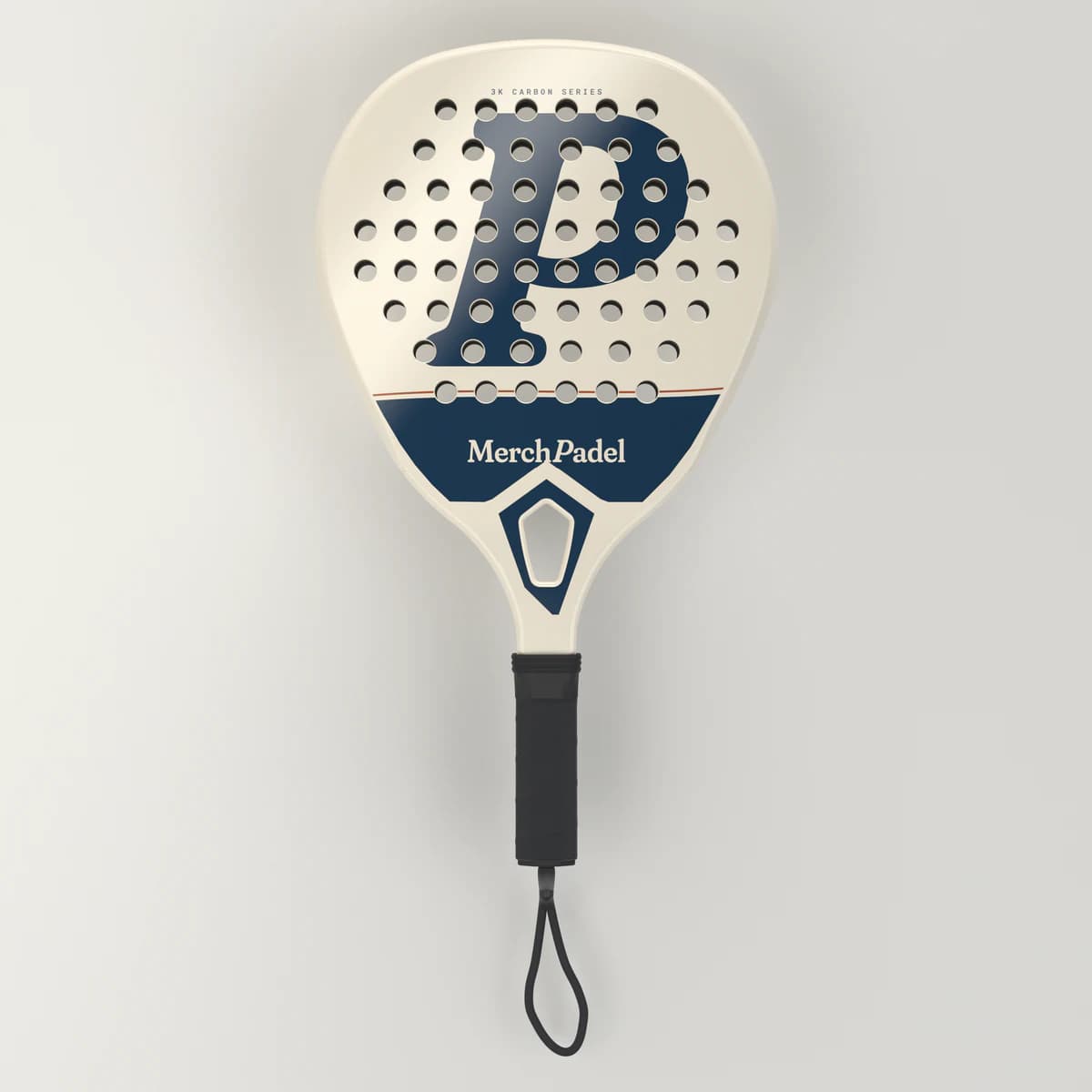
We offer one racket, the teardrop, in three materials: the 3K, with 3K carbon and a medium EVA core, and the 12K and 18K, with 12K or 18K carbon and a hard EVA core. What that material does and does not tell you is explained in 3K vs 12K vs 18K carbon explained.
Not sure which material suits your arm? Choose the 3K: the medium EVA core is the softest and most forgiving option. Want to talk it through? Send us a message via the chat or by email.
Checklist before you choose a racket
- Do you know the weight, and does it suit how long and how often you play?
- Do you know the balance, or have you measured it yourself in mm from the bottom of the handle?
- Does the balance suit your game: low, below about 260 mm, for control; high, from about 270 mm, for power?
- Have you thought about your arm, and do you go for lighter with a lower balance when in doubt?
- Does the shape suit the balance you are looking for?
- Have you allowed for the overgrip and frame protector you will put on it?
Your next step
Know which shape and balance suit you? Then the next step is your design. Have a logo but no design yet? Send it to us through the design service. We will make a design proposal, free and without obligation. Want rackets for a team or company? Take a look at business; from 200 pieces we make a custom quote.
Frequently asked questions
How much does an average adult padel racket weigh?
Many adult padel rackets weigh roughly between 350 and 375 grams, according to an explanation on padel.how. Two rackets of the same model can differ by a few grams, which is why manufacturers often give a range.
What does the balance of a padel racket mean?
The balance of a padel racket is the point at which the racket sits in equilibrium, measured in millimetres from the bottom of the handle. Below about 260 mm the balance is called low, from 260 to 270 mm medium and from about 270 mm high.
How do I measure the balance of my padel racket myself?
Lay the racket flat across a narrow slat and slide it until it balances. Mark that point and measure the distance in millimetres from the bottom of the handle. Below about 260 mm the balance is low, from about 270 mm high.
Is a heavy padel racket bad for my elbow?
A heavy or head-heavy padel racket puts more strain on your wrist and elbow, especially with a lot of repetition. A lighter racket with a low balance can reduce the strain. If you have persistent pain, see a physiotherapist or your GP.
Which weight and balance suit a beginner?
A beginner usually plays comfortably with a lighter to medium racket and a low to medium balance. That keeps the racket easy to manoeuvre and forgiving, and your arm gets used to the sport gradually. A round racket often suits that well. We only offer the teardrop; within that range, the 3K, with medium EVA, is the forgiving choice.